


How to Become a Skilled Martial Arts Instructor
Have you ever been sat in the Do Jang watching your Instructor leading a class and thought “I’d love to be able to do that one day.”?
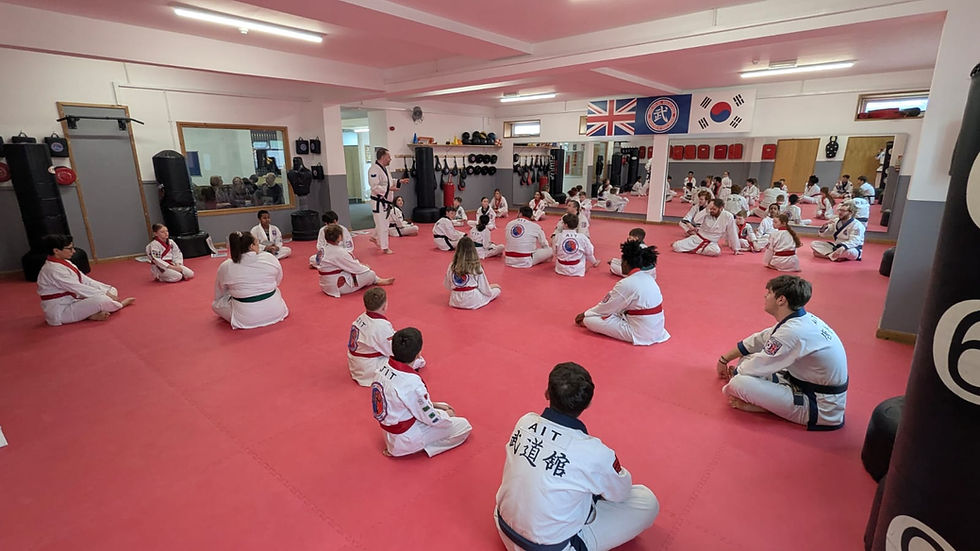
Perhaps you are already enjoying helping other students either in a class, or even as one of our Assistant or Junior Instructors. Maybe you find you enjoy demonstrating techniques to newer members, encouraging someone who is struggling, or even helping in a lower ranked class, all the while imagining what it would be like to stand at the front of the Do Jang and teach a class of your own.
Becoming a skilled Martial Arts Instructor isn't simply about achieving a Black Belt, being a great martial artist and being a great Instructor are two different skills—and becoming an excellent Instructor means developing both.
At North Manchester Family Martial Arts Centres, we give students the opportunity to develop their leadership and teaching skills from little things such as leading a warm up in your own class, through to the Instructor Training pathway offered by Family Martial Arts Centres, including our Certified Instructor Training (CIT) Programme.
But what does it actually take to become an Instructor, and what happens once you get there?
1: Become a Great Student
Every Instructor starts as a student. Before you can effectively teach somebody else, you need to understand what it is you are going to be helping others to learn. If you don’t know it, you can’t teach it!
That means attending classes regularly, listening to your Instructors, working on your techniques, asking questions and being prepared to make mistakes. Being an excellent student, and in turn an excellent Instructor, isn't about being perfect, it’s about having the attitude of someone who wants to keep learning, constantly looking to grow their knowledge and skill set, and understanding that it never stops.
To be an Instructor, one of the most important things an you can understand is to remember what it feels like to be a beginner. Do you remember the first time you tried a new stance, or the first time you struggled to remember a pattern, and the first time you had to perform that pattern at the Graduation?
Those experiences are all steps we take as we develop and grow, and it becomes incredibly valuable to remember those feelings and experiences when you eventually help someone else through exactly the same challenges.
2: Start Helping Others
You don't suddenly become an Instructor on the day you complete the Instructor Training programme, good Instructors develop gradually over time, and usually start their journey long before they have even thought about becoming an Instructor.
Lots of Instructors start off simply by helping a fellow class mate remember a technique, demonstrating a self defence with their Instructor, or holding a pad for the group. These may seem like small things, but they are actually every Instructor’s first lessons in leadership.
Most future instructors also very quickly discover that knowing how to do something isn't the same as knowing how to explain it. You might be able to perform a technique perfectly yourself - but can you break it down into simple steps that a four-year-old Tiger, or a forty-year-old beginner can understand?
Helping demonstrate a technique in class is one thing, being able to teach said move, is a completely different ball game. But it is the best place to start, It will get you used to standing in-front of others, and by watching and listening to your Instructor, understanding how to deliver the class to students of varying experience.
If you are already helping your Instructor and fellow students in other classes, maybe challenge yourself and ask the following:
How does my Instructor spot when another student is doing something incorrectly?
How do they explain how they can improve without discouraging them?
How do they manage the class so that everyone feels like they are being engaged with?
You see, that’s the real point when you realise that its not just about showing someone how to do a technique, that’s where you realise teaching becomes a skill in its self.
3: Develop Your Leadership Skills
As mentioned previously, at Family Martial Arts Centres, Instructor development isn't just about martial arts techniques, it’s also about people. Being an instructor is understanding why it is a person has walked through the Do Jang doors, it’s about realising how you can them achieve their personal goals, and above all it’s understanding that no two student are the same, and teaching one person can be very different from teaching another.
Our Leadership Programme, and in turn our Instructor Training Programmes give students the opportunities to develop their communication, build their confidence, develop their training, and provide a positive mental attitude every time they walk out onto the mats so they have the ability to help others through their own martial arts journey.
These are also skills that are useful far beyond the Do Jang. They can help at school, university, work, in presentations, when meeting new people and in almost any situation where communication, interaction and leadership are important.
For students who discover that they really enjoy helping others and making a difference, challenging themselves to lead others by first becoming an Assistant Instructor, and then a full Instructor can be the next stage of not only their martial arts journey but the next exciting stage of their life.
4: Join the Instructor Training Programme
For those who want to take their development further and look at becoming an Assistant Instructor or Instructor, the FMAC Instructor Training Programmes provides structured training in what it takes to become a Family Martial Arts Centres Instructor.
The Junior Instructor (JIT) & Assistant Instructor (AIT) programmes look at what is needed to become not only a leader of others in your centre, but also support for your fellow class mates, and inspiration for other students. The JIT & AIT programmes look at incorporating both theory and practical sessions to give all participants the chance to understand how to, and then in turn deliver certain aspects of Martial Arts classes such as the warm ups, or one to one demonstrations.
For those students who may be wanting to look at making a career out of Instructing, the organisation also offers the Certified Instructor (CIT) Programme. This programme not only covers the skills required to teach and develop students on their martial arts journey, but it does it alongside the knowledge needed to start up, develop and in turn operate a successful martial arts school, looking at the financial, promotional, and regulatory aspects of running your own centre.
These programmes are incredibly important to anyone thinking about becoming an Instructor, as they help everyone to understand what is required to be able to teach, communicate, motivate, organise, lead and continually develop themselves and others.
5: Put Your Training Into Practice at the Do Jang
This is where the theory is put into practice, and classroom knowledge becomes real.
You can't learn to become an excellent Instructor simply by reading a workbook or attending the Instructor Training programme………
……you need to practice.
At our centres, future Instructors have the opportunity to observe experienced Instructors, understand what is required and gradually become more involved in the teaching environment over time.
You will learn how to:
Organise a class.
Demonstrate techniques clearly.
Explain movements in different ways.
Work with different ages and abilities.
Keep students engaged.
Correct technique positively.
Manage groups.
Encourage students when they are struggling.
Recognise when somebody needs more help.
Give appropriate feedback.
Create an enjoyable learning environment.
Adapt your teaching to the students in front of you.
And perhaps most importantly, as we mentioned earlier you learn that every student is different, and that the explanation that works perfectly for one person might not work for somebody else. You will learn a skilled Instructor learns to recognise that and in turn adapt.
6. Remember - Becoming an Instructor Is Not the Finish Line
One of the biggest misconceptions about Instructor Training is that once you've completed your training, you've finished learning, actually, it's quite the opposite. That's when the real learning begins. Martial Arts Instructors should continually improve their own knowledge, teaching ability and leadership skills. Family Martial Arts Centres recognises this through ongoing Instructor development, instructor seminars and professional development.
The best Instructors continue to attend the own classes, constantly improving on what they already know and what they need to know for the future. They watch other Instructors; They ask questions; They learn from their peers; They reflect on their classes and always look for ways to improve.
They don't think: “I've qualified, so I know everything.”
They think: “I've qualified - now how can I become even better?”
7. So, What Makes a Skilled Martial Arts Instructor?
At the start of this, we asked how to become a skilled Martial Arts Instructor? Well hopefully you can see from above, that a skilled Instructor isn't necessarily the person who can perform the highest kick or shout the loudest. A skilled instructor is one is continually learning, constant developing, and always looking at what is best for the students around them and how understanding how to interact with them to get the best out of them.
A skilled Martial Arts Instructor is always asking themselves:
Do the students understand what they're learning?
Do students feel comfortable with what we are asking them to do?
Are nervous students become more confident?
Does a struggling student keep trying?
Are students excited to come back to their next class?
Do students feel that their Instructor genuinely wants them to succeed?
You see, a great Instructor doesn't simply teach martial arts, they help people to believe that they can achieve more than they ever thought possible.
8. You Don't Have to Decide Today
Perhaps you're reading this and thinking: “I'd love to become an Instructor one day.”
Great!
You don't need to have everything figured out yet. You might be a junior student who enjoys helping others. You might be a teenager who wants to develop leadership and communication skills. You might be an adult student who has discovered a passion for martial arts and is wondering where the journey could take you.
Or you might already be a Black Belt and be thinking about what comes next.
Your journey can develop step by step, and at a pace you are comfortable with. Start by becoming the best student you can be, and then look for opportunities to help others. Look at developing your leadership skills both inside and outside the Do Jang, all the time watching and learning from experienced Instructors.
Above all look for opportunities to get involved at the Do Jang.
And, when you're ready to take the next step, explore the Family Martial Arts Centres Instructor Training Programmes.
9. Could You Be Our Next Instructor?
Some of the best Instructors started exactly where you are now:
Standing at the back of the class. Watching. Learning. Wondering if they could do it.
The difference is that eventually they decided to step forward.
Family Martial Arts Centres and our Instructor Training could give you the opportunity to turn your passion for Martial Arts into something much bigger - helping other students achieve their goals while continuing to develop yourself, and in turn make a living out of it. And you don't have to wait until you've reached the end of your martial arts journey to start thinking about becoming an Instructor, your journey to becoming an Instructor can begin today if you want it to.
If you think teaching Martial Arts could be something you'd enjoy, speak to your Instructor and ask about the Instructor Training programmes and whether it is something they feel you would be good at.
Who knows?
The student you're helping today could be the first step towards the Instructor you become tomorrow.


Comments