


What to Expect When You Move Into Green & Red Belt Classes
Moving into Green & Red Belt classes is a big moment. It’s the point where training starts to feel different. More focused. More challenging. More exciting.

Whether you’re a student stepping up for the first time, or a parent watching your child move beyond the Beginner level, this transition marks the start of a whole new phase in their martial arts journey.
Here’s exactly what to expect when students move into Green & Red Belt classes at our Prestwich, Oldham, Middleton & Denton centres.
You’ve Earned Your Place – This Is the “Next Level” of Training
Green & Red Belt classes are not just a continuation of Beginner classes – they’re a step up in expectation, pace and responsibility.
Students in these classes have already shown:
Consistency
Good listening skills
Respect for Instructors and training partners
A willingness to try hard, even when things feel difficult
This is where training becomes more intentional. Students aren’t just copying movements anymore – they’re starting to understand why they’re doing things and how to improve them.
For parents, this is often where you begin to see noticeable changes in:
Confidence
Maturity
Focus
Resilience when things don’t come easily
Training in a Mixed Green & Red Belt Class
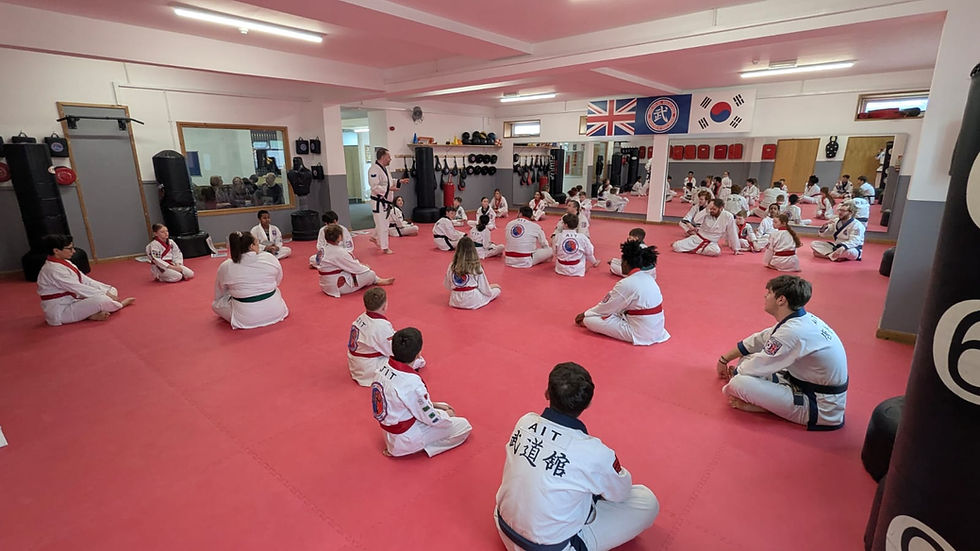
Green & Red Belt classes bring together students from 6th Gup through to 1st Gup, with the occasional Midnight Blue Belt in the mix. This is a huge range of experiences & abilities and it creates a powerful learning environment.

Why this is a good thing:
New Green Belts quickly learn what “good” looks like by training alongside more experienced students
Red Belts develop leadership by setting the example
Younger students learn from older students
Older students develop patience, control and responsibility
This mixed-belt environment helps students grow faster – not just in skill, but in character.
Faster Pace, Higher Focus, More Challenge
One of the first things students notice is the pace. Green & Red Belt classes:
Move faster
Cover more material
Expect students to remember more
Ask for sharper technique and stronger effort
This isn’t about pressure – it’s about growth.
Students are now trusted to:
Pick things up more quickly
Stay focused for longer
Self-correct when they make mistakes
Push through moments of frustration
For parents, this can be where you notice your child starting to develop real grit. They may come home tired, proud and talking about how tough the class was – and that’s a good sign. It means they’re being stretched.
More Advanced Patterns & Techniques
Forms/Hyungs/Patterns become:
Longer
More technical
More detailed
Students begin to work on:
Precision
Power control
Balance
Flow and rhythm
At this stage, it’s less about just knowing the moves and more about how well they perform them.
This teaches:
Patience
Attention to detail
The value of practice
That progress comes from repetition, not shortcuts
These lessons transfer directly into schoolwork and everyday life.
Sparring Develops Control, Confidence & Respect

Sparring is now part of the Green & Red Belt classes and is:
Structured
Technical
Controlled
Strategic
Not just a fight!
Students learn:
Distance control
Timing
Defensive awareness
How to stay calm under pressure
Importantly, sparring is not about aggression. It’s about learning self-control, emotional regulation and respect for others.
For parents concerned about confidence and bullying, this stage of training is often where children:
Become more assertive
Carry themselves differently
Feel less intimidated by challenges
Learn to stay composed under pressure
Realistic Self-Defence & Awareness

Self-defence training becomes more practical and thoughtful at this level.
Students start learning:
How to manage space
How to stay aware of their surroundings
How to respond calmly under pressure
That avoidance and awareness are just as important as physical skills
This builds confidence without creating fear and teaches responsibility alongside capability.
Leadership Starts to Matter
Green & Red Belts aren’t just students anymore – they’re role models in training. They are encouraged to:
Set the standard
Help newer students
Show maturity
Take responsibility for their effort and attitude
This is often where Instructors begin to notice who naturally steps into leadership. Not because they’re loud – but because they’re consistent, respectful and reliable.
For many students, the Leadership Programme becomes the gateway into the Instructor Training Programme.
It’s Normal If It Feels Hard at First
Almost every student has a moment where they think:
“Wow… this is harder than before”
That’s not failure – that’s growth.

Parents may notice:
Temporary dips in confidence
A student feeling challenged
Frustration when techniques don’t click immediately
This phase is incredibly important.
It teaches that progress isn’t about being comfortable – it’s about learning how to stay committed when things feel difficult.
Our instructors support students through this transition carefully, helping them build belief in their own ability to rise to the challenge.
What Parents Can Do to Support This Transition
You don’t need to coach technique – your role is emotional support.
Simple things help massively:
Asking what they learned
Praising effort, not just outcomes
Encouraging consistency
Reminding them that struggle is part of progress
Students who feel supported at home adapt faster and grow more confidently in class.
This Is Where Confidence Starts to Compound
The move into Green & Red Belt classes is where many students begin to:
Take ownership of their training
See themselves as “serious” martial artists
Develop long-term confidence
Build real resilience
It’s not just about belts. It’s about identity. This is where students start to believe:
“I can handle harder things”
And that belief shows up everywhere else in life.
Ready for the Next Step?
If your child is approaching Green Belt – or if you’re a student preparing to move up – this stage of training is something to feel proud of.
It’s challenging. It’s exciting. And it’s where real personal growth begins.


Comments